Make your presence predictable
Trust develops when a dog can approach, retreat and understand what happens next. Gentle handling and reward-based learning make ordinary encounters easier without demanding instant affection.
Everyday companionship
For people considering a dog and guardians already sharing their lives with one, companionship starts with understanding what a dog needs—not asking a dog to meet every human expectation.
Start with building trust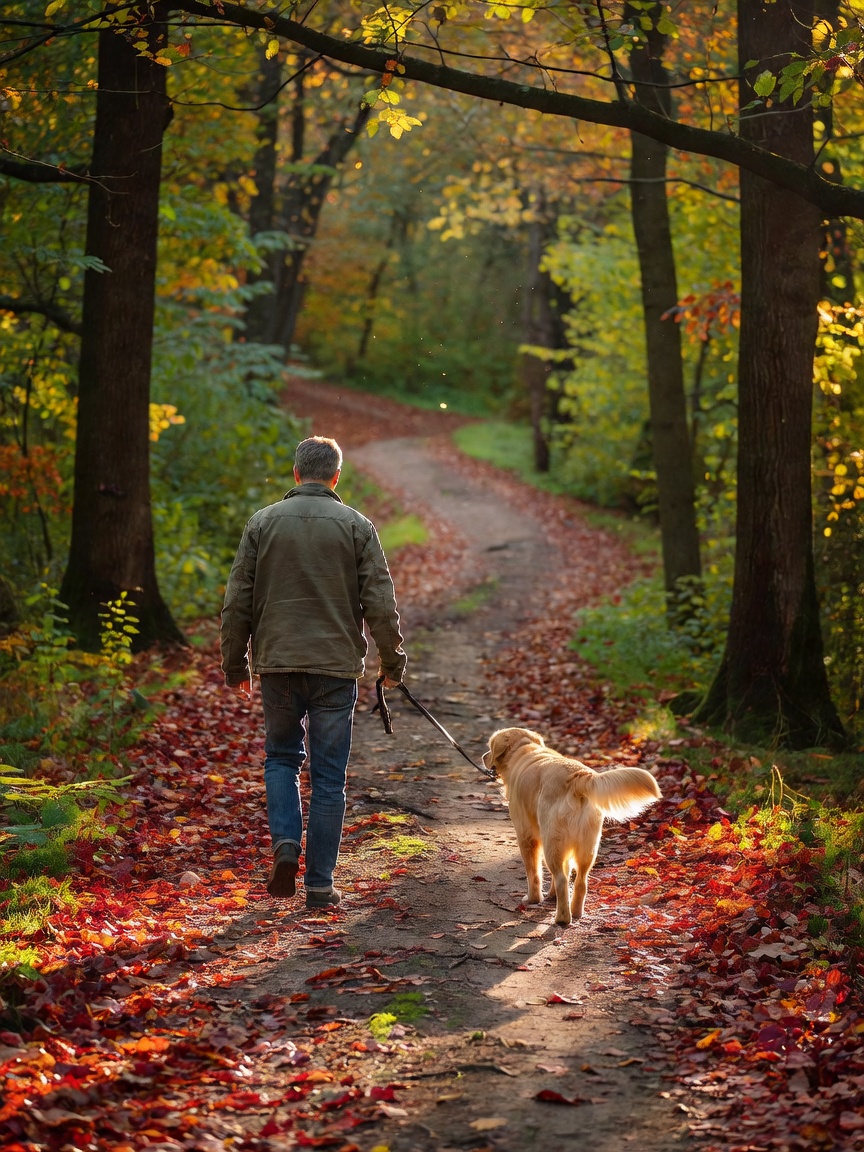
A dog can become a deeply familiar companion: a presence beside your chair, a reason to step outside, a willing partner in a small daily ritual. That friendship is real without being identical to human friendship. Dogs have their own senses, preferences, fears and limits. Affection becomes more meaningful when those differences receive attention rather than being wished away.
This independent site explores why dogs can feel like close friends through four connected habits: building trust, noticing communication, sharing workable routines and accepting responsibility across a lifetime. The focus is everyday welfare, not choosing a supposedly perfect breed or promising that a pet will transform your health. Some dogs enjoy visitors and busy outings; others value distance, quiet and a small circle of familiar people.
The American Veterinary Medical Association offers a useful foundation in responsible pet ownership. The American Veterinary Society of Animal Behavior supports reward-based training, while Humane World for Animals connects companionship with humane care and thoughtful adoption. Their perspectives point toward the same practical idea: a relationship should work for the animal as well as the person.
Trust develops when a dog can approach, retreat and understand what happens next. Gentle handling and reward-based learning make ordinary encounters easier without demanding instant affection.
A wagging tail tells only part of a story. Read posture, movement and context together, then give a dog room when the situation appears uncomfortable.
Walks, rest, play and time apart all belong in a shared life. A useful routine meets the individual dog’s needs and remains realistic on your busiest days.
Friendship includes veterinary care, contingency planning and adaptations for age or disability. Looking ahead makes it easier to protect comfort when circumstances become less convenient.
Before asking whether a dog will be your closest companion, ask what life beside you would feel like for that dog. Use this checklist before adoption, after a household change or whenever your usual routine stops working.
If several answers are uncertain, pause and make a practical plan. Waiting, fostering through an established organisation or choosing not to keep a dog can be a responsible decision. Companionship is not diminished by admitting that an animal’s needs require more time or resources than you currently have.
No. Tail movement can accompany excitement, uncertainty or tension. The dog’s whole body and the surrounding situation matter more than one isolated signal.
Yes, adult dogs can develop strong relationships. Allow adjustment at the individual dog’s pace rather than judging the relationship by a fixed settling-in deadline.
No. Comfortable rest and manageable time apart are valuable skills. Distress when alone deserves attention, not the assumption that it is simply proof of devotion.
No. A dog may bring companionship, but emotional or health outcomes cannot be promised. Personal health concerns belong with a qualified professional.
Your privacy choices We use necessary cookies to run the site and, with your consent, optional ones to measure visits. You can change this at any time. More about cookies